AI-generated trade ideas: a fresh board of swing trade setups every morning
After each US close, Gekko scans every stock it covers for a fresh smart money signal that lines up with a confirming move on the chart — and that nothing fresher contradicts. The survivors are on the board before the open, each one planned: entry, stop, target, reward-to-risk, and what it looks like on $10,000.
Every feature unlocked. No credit card required.
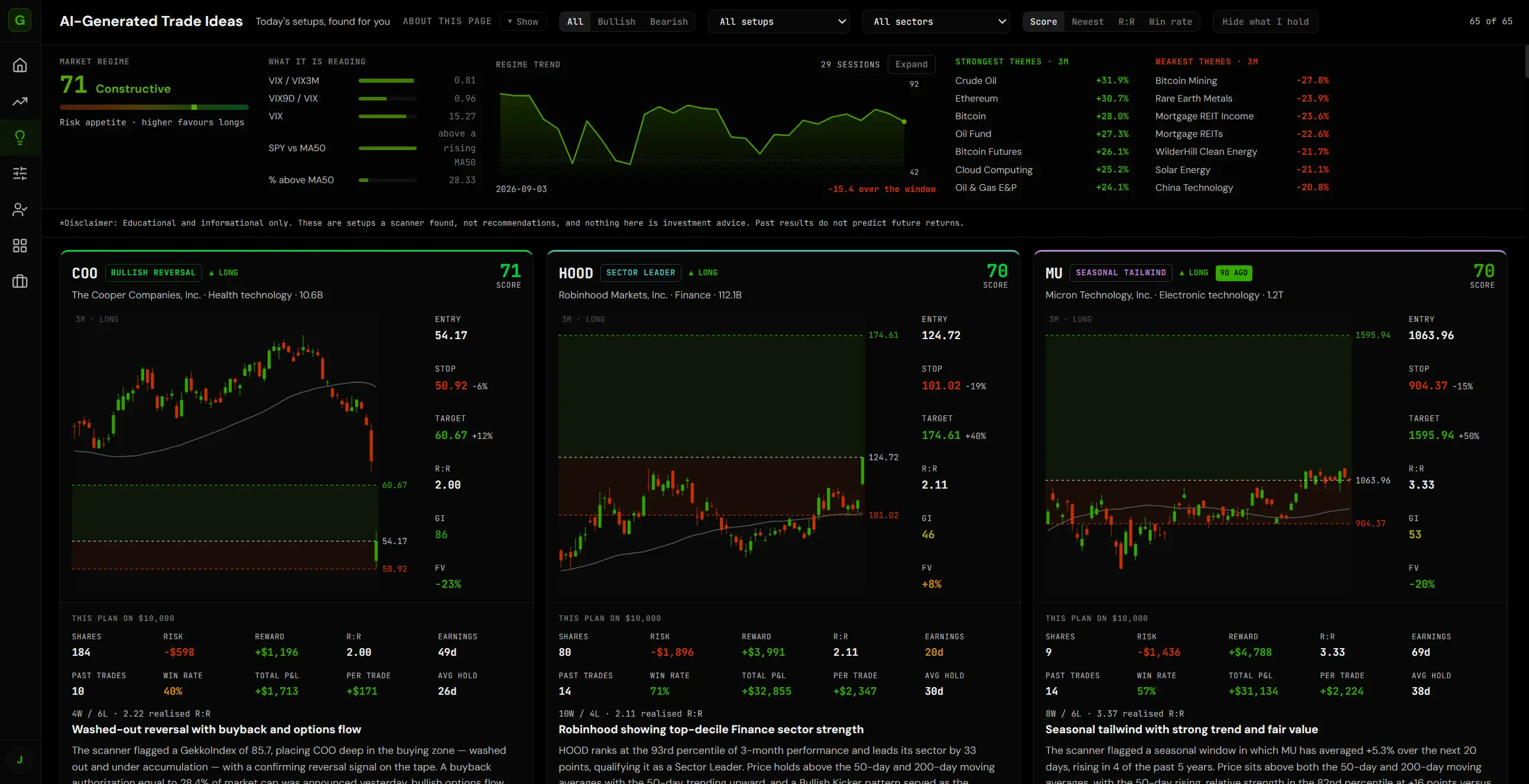
The board on a constructive morning: the regime panel across the top, then every idea as a card with its levels drawn on a three-month chart.
Three gates, then a score
Most "AI stock picks" are a language model's opinion. Gekko's ideas are rules first: an idea has to carry evidence from the same filings and flow that make up the rest of the platform before the AI writes a word about it.
A fresh smart money signal
An insider purchase, a congressional purchase, unusual options flow, a call from a top-ranked analyst or a buyback authorisation — within the last two weeks, verifiable in the filing. 13F ownership adds to the score but cannot open the gate on its own.
Confirmation on the chart
A volume thrust, a reversal, a candle pattern, a GekkoIndex zone entry, a sustained cluster of flow, a seasonal tailwind, or a hold or rejection at the 50-day average. Every one of the twelve setup types requires one.
Nothing fresher says otherwise
A newer opposing signal vetoes the idea; an older one marks it contested on the card. Survivors are scored and ranked, the Trade Planner backtests the stop and target against the stock's own history, and the AI writes the thesis.
What's on every card
A card is a record of what the scanner saw when it planned the trade. The levels are frozen at generation, so an idea never quietly rewrites itself against a newer price — only the days-to-earnings countdown moves.
- ScoreHow strongly the evidence stacked up, out of 100 — the default sort for the board.
- SetupWhich of the twelve setup types it is, and whether it is long or short.
- Entry · Stop · TargetThe planned levels, with the stop and target as a percentage from entry and drawn on a three-month chart.
- R:RReward to risk — target distance over stop distance.
- This plan on $10,000Shares, dollars at risk and dollars at target, so the idea is sized before you have opened a calculator.
- Past tradesHow the same setup has played out on this stock before: trades, win rate, total and per-trade P&L, average hold.
- GI · FV · EarningsThe GekkoIndex and Fair Value readings, and the days until the company next reports.
- Why it scoredA short written thesis naming the signals behind the idea — the filing, the flow, the pattern — in plain English.
Twelve setup types
Mostly long. The short setups appear when the evidence points the other way, which on a weak tape is exactly when you want to know.
Know the tape before the ideas
Across the top of the board, a 0–100 market regime score reads the volatility term structure, the VIX, where the S&P 500 sits against its 50-day average and how many stocks are above theirs — then says in a word whether the backdrop favours longs. A trend of recent readings sits beside it, with the strongest and weakest themes over three months.
- Filter the board: All, Bullish or Bearish; any setup type; any sector
- Sort by Score, Newest, R:R or Win rate — a NEW TODAY badge marks the latest run
- Hide what you already hold, so the board only shows what you are not in
- Open on chart plots the entry, stop and target on the Charts page; Alert this trade watches them for you
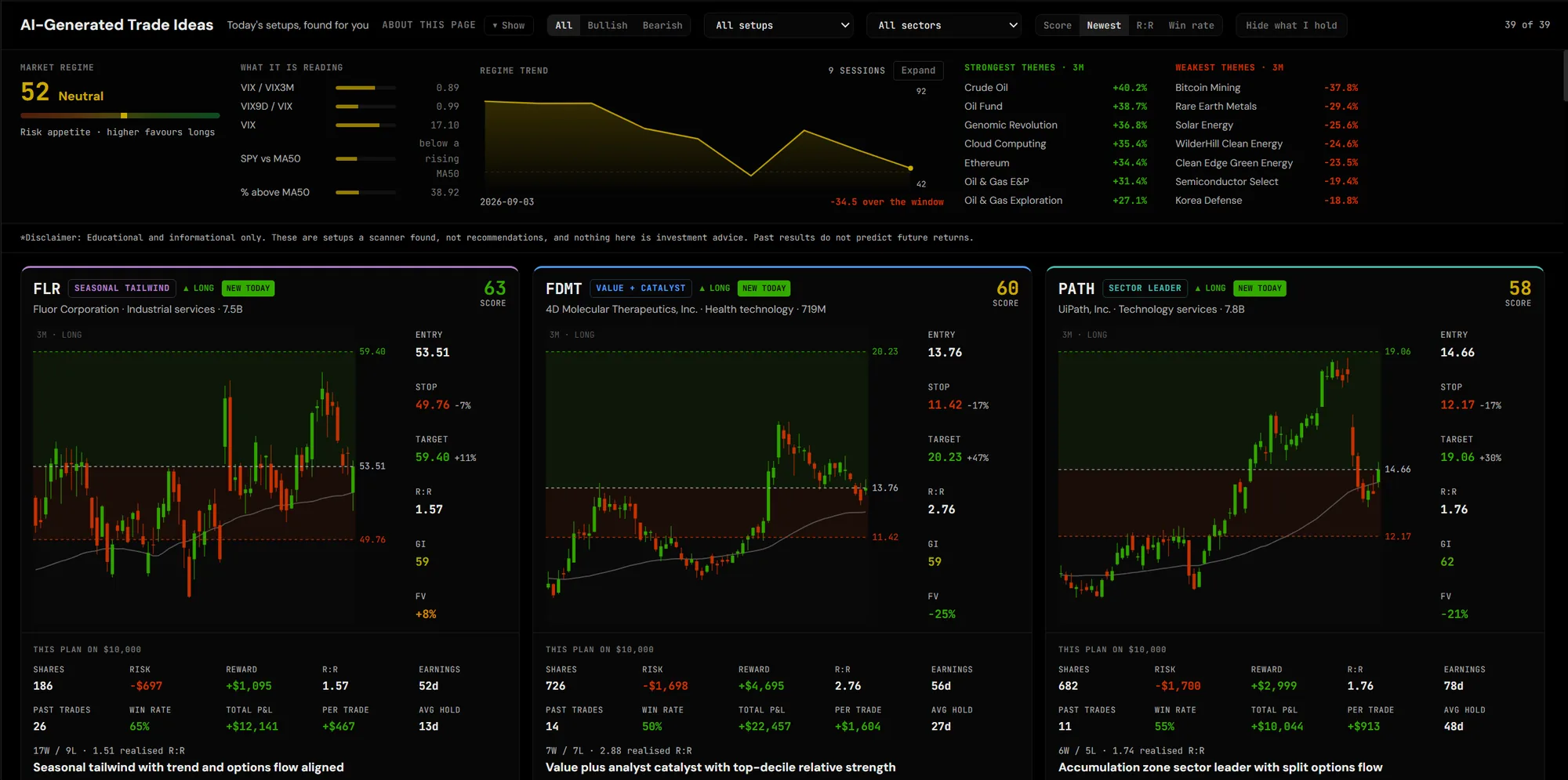
See this morning's board, then open any idea on the chart with the smart money layers switched on.Every feature, free for seven days. No credit card required.
Start Free Trial →Research starting points, not recommendations
Ideas are generated by rules and scored automatically. They are educational and informational only — setups a scanner found, not advice — and not every idea works out. The card tells you what the same setup has done on that stock before so you can judge it; the chart, the zone track record and your own risk rules do the rest.
Questions about AI trade ideas
When does the board refresh, and how many ideas are there?
Once a day, after the US close, so it is ready before the next open. The count varies with the tape — the bar is a fresh smart money signal plus a confirming move, and on a quiet day few names clear it. Ideas carry forward until they are invalidated, so there is a working board even on thin days.
Do the levels update as the price moves?
No, deliberately. Entry, stop, target, the GekkoIndex and Fair Value readings and the chart are frozen at the moment the idea was generated. Recomputing the reward-to-risk against a newer price would quietly rewrite history. Open the idea on the chart to see what has happened since.
Is this financial advice?
No. Gekko provides research tools and data; the ideas are setups a rules-based scanner found and scored, not personal recommendations. Past results, including the per-setup history on each card, do not predict future returns.
How is this different from asking a chatbot for stock picks?
A general chatbot has none of this data. Gekko's ideas start from the filings and flow it already tracks — insider purchases, congressional disclosures, options positioning, analyst calls, buybacks — require a technical trigger on the actual price bars, and are backtested on the stock's own history before the AI writes a line of thesis. The writing is the last step, not the first.
See this morning's board
Every feature, free for seven days — nothing to enter, nothing to cancel.
Start Your FREE 7 Day Trial → Every feature unlocked. No credit card required.